Table of Contents
What is Organic Glucose Syrup?
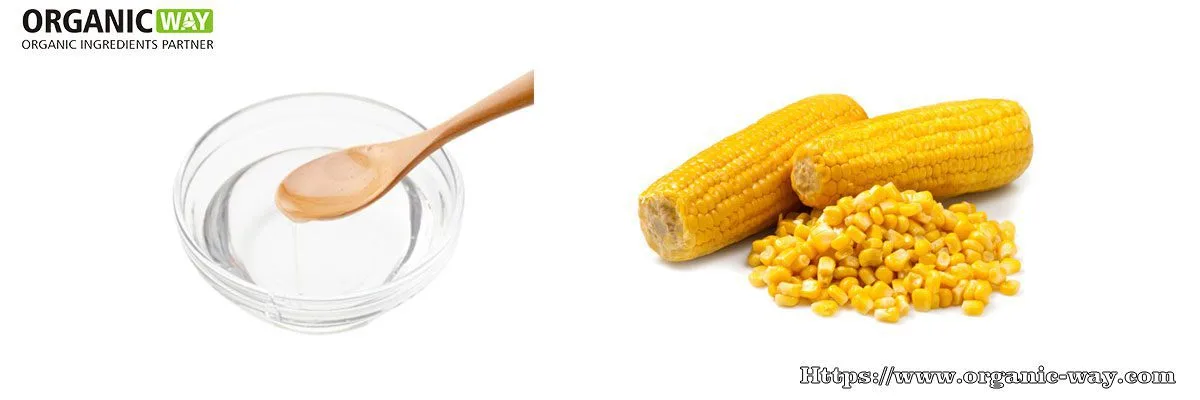
Organic Glucose Syrup is a liquid carbohydrate ingredient produced by ORGANICWAY through enzymatic hydrolysis of certified organic, non-GMO corn starch (or wheat starch as an alternative source). The hydrolysis process converts starch polymers into a spectrum of glucose oligomers, controlled by adjusting enzyme activity and reaction time to achieve precise Dextrose Equivalent (DE) values.
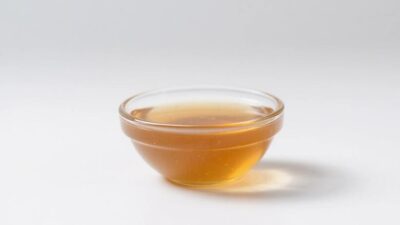
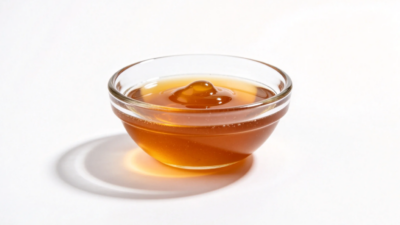
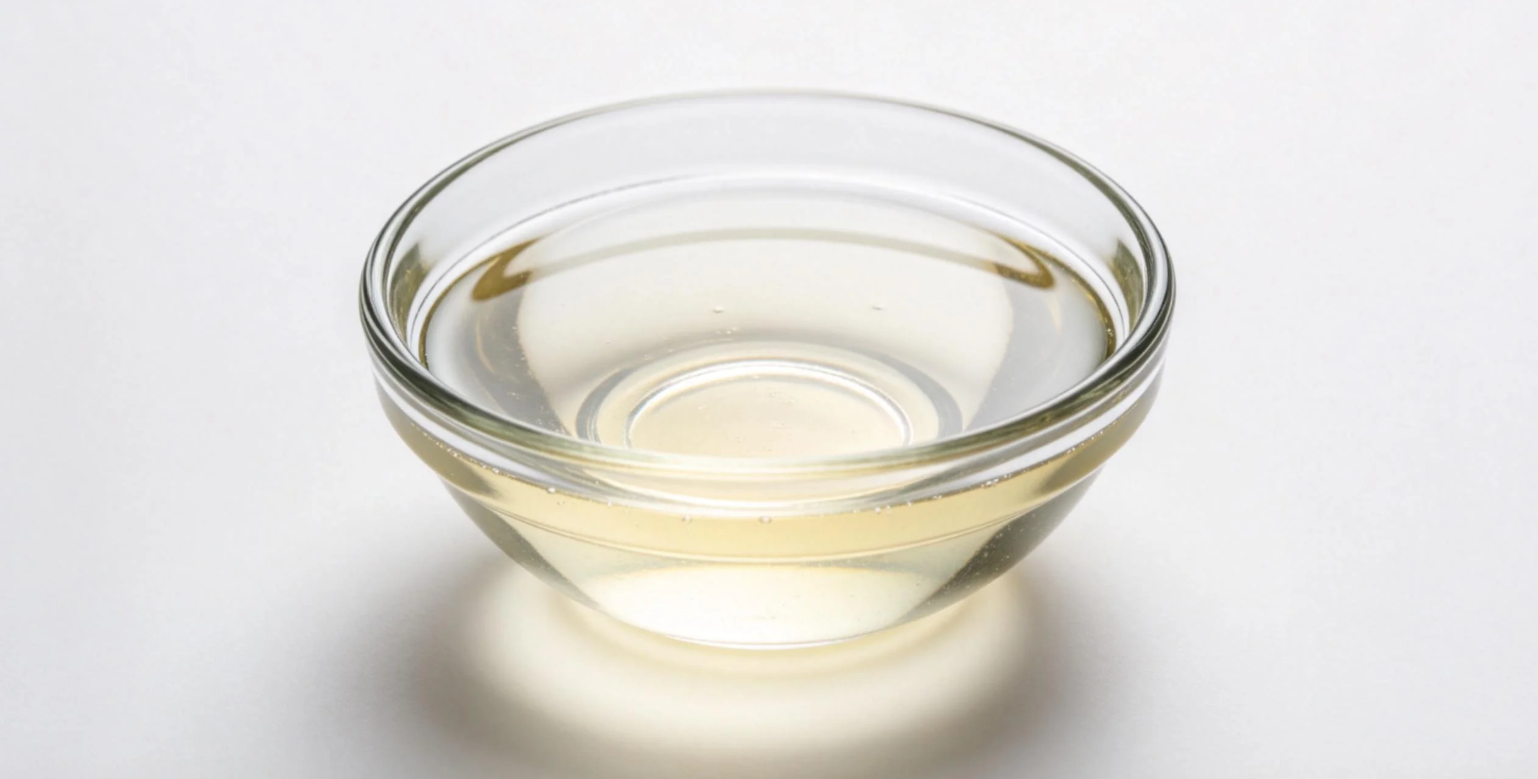
The result is a clear to pale yellow, viscous liquid with a mild, clean sweetness and powerful multi-functional properties: crystallization prevention, humectancy, texture stabilization, freeze-point depression, and browning enhancement. These attributes make organic glucose syrup one of the most widely deployed functional sweeteners in modern food manufacturing
DE Grades Explained
Dextrose Equivalent (DE) is the key technical parameter governing performance. It measures the percentage of reducing sugars relative to total dry solids:
- Low DE (38–42): Higher average molecular weight. Provides greater viscosity, binding strength, and mild sweetness. Ideal for controlling ice crystal formation in ice cream, extending shelf life in baked goods, and building chew in gummy confectionery. Lower fermentability and slower browning rate.
- High DE (58–62): Higher glucose and maltose content. Delivers more pronounced sweetness, faster Maillard browning, better fermentability for brewing/fermentation applications, and enhanced humectancy for bakery.
Production & Quality Standards
Our manufacturing plant operates under FSSC 22000 food safety management. Every production batch is tested for:
- Dextrose Equivalent (Lane-Eynon titration or enzymatic method)
- Dry Solids / Brix (refractometry)
- pH (potentiometric)
- Sulfur Dioxide (distillation / ion chromatography, limit < 10 ppm)
- Ash Content (gravimetric)
- Color (ICUMSA colorimetric)
- Microbiological panel: TPC, yeast & mold, Salmonella, E. coli
- Heavy metals: Pb, As, Cd, Hg (ICP-OES)
Certifications Available
USDA Organic, EU Organic, Non-GMO Project Verified, Halal (IFANCA), Kosher, Vegan, Gluten-Free (corn-based), FSSC 22000.
Minimum Order Quantity
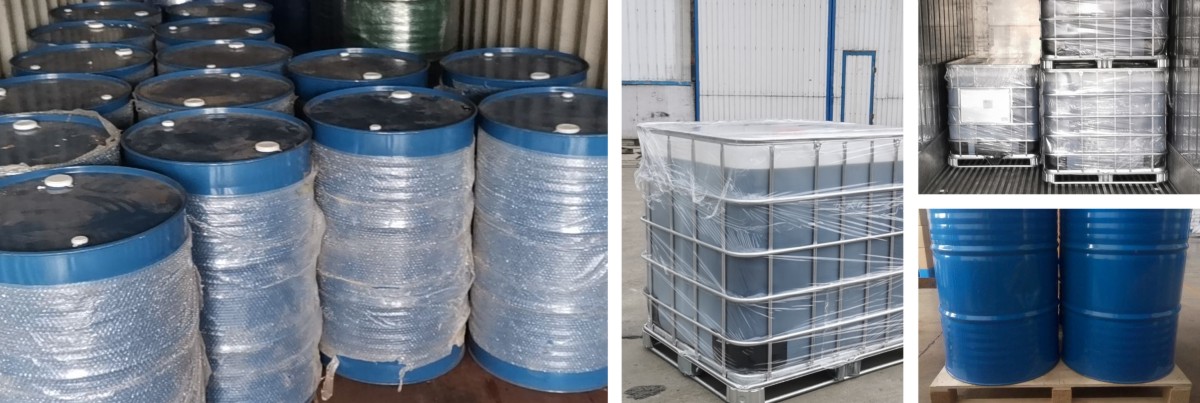
Sample quantities available for initial formulation trials. Commercial bulk supply in 300 kg HDPE drums or 1,000 L IBC tanks. Contact [email protected] for a quotation and lead time.
TECHNICAL SPECIFICATIONS
Physical & Chemical Properties
| Parameter | Low DE Grade | High DE Grade | Test Method |
|---|---|---|---|
| Dextrose Equivalent (DE) | 38–42 | 58–62 | Lane-Eynon / AOAC 920.183 |
| Dry Solids (Brix) | 78–82% | 78–82% | Refractometry |
| Appearance | Clear to pale yellow, viscous liquid | Clear to pale yellow, viscous liquid | Visual |
| pH (10% solution) | 4.0–6.0 | 4.0–6.0 | Potentiometric |
| Sulfur Dioxide (SO₂) | < 10 ppm | < 10 ppm | IC / Distillation |
| Ash Content | ≤ 0.3% | ≤ 0.3% | Gravimetric (AOAC 940.26) |
| Color (ICUMSA) | ≤ 25 IU | ≤ 25 IU | ICUMSA Method GS2/3-9 |
| Viscosity (25°C) | 25,000–40,000 mPa·s | 10,000–20,000 mPa·s | Brookfield |
| Odor | Mild, characteristic, neutral | Mild, characteristic, neutral | Organoleptic |
| Taste | Clean, mildly sweet | Moderately sweet, clean | Organoleptic |
Carbohydrate Profile (indicative, Low DE 40 grade)
| Sugar Fraction | Approx. % of Dry Solids |
|---|---|
| Glucose (DP1) | 10–15% |
| Maltose (DP2) | 10–15% |
| Maltotriose (DP3) | 10–12% |
| Higher Oligosaccharides (DP4+) | 60–70% |
Carbohydrate Profile (indicative, High DE 60 grade)
| Sugar Fraction | Approx. % of Dry Solids |
|---|---|
| Glucose (DP1) | 25–35% |
| Maltose (DP2) | 20–25% |
| Maltotriose (DP3) | 12–15% |
| Higher Oligosaccharides (DP4+) | 30–40% |
Values are indicative. Request a Certificate of Analysis (COA) for each batch.
MICROBIOLOGICAL & CONTAMINANT STANDARDS
Microbiological Limits
| Test | Specification | Method |
|---|---|---|
| Total Plate Count (TPC) | ≤ 1,000 CFU/g | ISO 4833 |
| Yeast & Mold | ≤ 100 CFU/g | ISO 21527 |
| E. coli | Negative (< 3 MPN/g) | ISO 16649 |
| Salmonella spp. | Negative / 25g | ISO 6579 |
| Osmophilic Yeast | ≤ 10 CFU/g | Internal / AOAC |
Heavy Metal Limits
| Metal | Specification | Method |
|---|---|---|
| Lead (Pb) | ≤ 0.5 mg/kg | ICP-OES / AOAC 2015.01 |
| Arsenic (As) | ≤ 0.5 mg/kg | ICP-OES / AOAC 2015.01 |
| Cadmium (Cd) | ≤ 0.2 mg/kg | ICP-OES / AOAC 2015.01 |
| Mercury (Hg) | ≤ 0.05 mg/kg | ICP-OES / AOAC 2015.01 |
Pesticide Residues
Compliant with EU Regulation (EC) No 396/2005 (MRLs for organic crops). Batch-level multi-residue screening available upon request.
CERTIFICATIONS
| Certification | Status | Issuing Body |
|---|---|---|
| USDA Organic | Available | USDA-accredited certifier |
| EU Organic | Available | EU-authorized certifier |
| Non-GMO Project Verified | Available | Non-GMO Project |
| Kosher | Available | Orthodox Union (OU) or equivalent |
| Halal | Available | IFANCA |
| Vegan | Available | Third-party vegan certifier |
| Gluten-Free (corn-based) | Available | GFCO or equivalent |
| FSSC 22000 | Available | Accredited certification body |
COA (Certificate of Analysis), TDS (Technical Data Sheet), and SDS (Safety Data Sheet) provided with each order. Organic transaction certificates available per shipment.
APPLICATIONS & USAGE GUIDELINES
Recommended Application Sectors
| Application | Recommended Grade | Typical Usage Level | Key Function |
|---|---|---|---|
| Hard Candy & Lollipops | Low DE (38–42) | 30–60% of total sugars | Anti-crystallization, clarity, texture |
| Soft Candy & Gummies | Low DE (38–42) | 20–40% of total sugars | Chew, binding, moisture retention |
| Fondant & Fudge | Low or High DE | 15–35% | Prevent graining, smooth texture |
| Ice Cream & Frozen Desserts | Low DE (38–42) | 5–15% | Freeze-point depression, ice crystal control |
| Bakery & Soft Baked Goods | High DE (58–62) | 5–20% | Humectancy, shelf-life extension, browning |
| Cereal Bars & Energy Bars | Low or High DE | 10–25% | Binding, cohesion, moisture management |
| Jams, Jellies & Preserves | High DE (58–62) | 10–30% | Body, gloss, flavor enhancement |
| Beverages & Syrups | High DE (58–62) | 2–15% | Body/mouthfeel, caloric density |
| Brewing & Fermentation | High DE (58–62) | Variable | Fermentable sugar source |
DE Grade Selection Guide
| Objective | Recommended DE |
|---|---|
| Maximum crystallization prevention | Low DE (38–42) |
| Maximum ice crystal control | Low DE (38–42) |
| Maximum humectancy & shelf-life | High DE (58–62) |
| Maillard browning enhancement | High DE (58–62) |
| Fermentable sugar for brewing | High DE (58–62) |
| High viscosity for binding | Low DE (38–42) |
| Sweetness boost without fructose | High DE (58–62) |
| Reduced hygroscopicity | Low DE (38–42) |
Formulation Notes
- Glucose syrup is hygroscopic — formulations must be designed to manage final water activity (aw). Keep finished product packaging moisture-barrier rated.
- In candy systems, combine with sucrose at ratios of 30–50% glucose syrup of total sugar to prevent graining while maintaining desired sweetness level.
- Corn-based glucose syrup is naturally gluten-free and allergen-friendly; wheat-based is typically gluten-free after processing but corn-based is recommended for confirmed gluten-free labeling.
- When replacing conventional glucose syrup: organic grades are functionally equivalent — no reformulation is required in most applications.
- For high-DE grades in bakery, monitor water activity carefully — enhanced humectancy can extend softness but may also increase microbial growth risk if aw exceeds 0.85.
FAQ
Q1: What is the difference between Low DE and High DE glucose syrup, and how do I choose?
A: DE (Dextrose Equivalent) indicates the degree of starch hydrolysis and the proportion of reducing sugars. Low DE (38–42) has larger average sugar chains, resulting in higher viscosity, stronger binding, and lower sweetness. It excels in anti-crystallization and ice cream texture applications. High DE (58–62) is richer in glucose and maltose, providing more sweetness, better humectancy, and faster Maillard browning — preferred for bakery and preserved fruits. Select based on your primary functional requirement: binding/texture control → Low DE; sweetness/moisture retention/browning → High DE.
Q2: Is Organic Glucose Syrup the same as High Fructose Corn Syrup (HFCS)?
A: No. Organic Glucose Syrup and High Fructose Corn Syrup (HFCS) are distinct products. Glucose syrup is produced by hydrolyzing starch into glucose oligomers and contains primarily glucose and maltose — fructose content is negligible. HFCS undergoes an additional enzymatic isomerization step that converts 42–55% of the glucose into fructose. Our organic glucose syrup contains no fructose conversion and can be labeled as “Organic Glucose Syrup” or “Organic Corn Syrup” on ingredient declarations — it does not carry HFCS labeling requirements.
Q3: Can I use this product in gluten-free formulations?
A: Yes, when specifying our corn-based organic glucose syrup. Corn is inherently gluten-free, and our manufacturing process does not introduce gluten-containing ingredients. This product is suitable for certified gluten-free applications and can support “Gluten-Free” claims on your finished product. Our wheat-based variant is typically processed to gluten-free levels, but for applications requiring strict gluten-free certification, we recommend the corn-based grade.
Q4: What does SO₂ < 10 ppm mean for my product labeling?
A: Sulfur dioxide (SO₂) and sulfites are regulated allergens/additives in many markets. Under EU regulations, SO₂ concentrations ≥ 10 mg/kg (ppm) in the finished food must be declared on the label. Our organic glucose syrup contains SO₂ at < 10 ppm, meaning it does not trigger mandatory sulfite declaration in EU-compliant products, supporting a cleaner ingredient list and “sulfite-free” positioning in markets where this is commercially relevant.
Q5: How does Organic Glucose Syrup compare to organic sucrose in confectionery?
A: In confectionery, sucrose alone tends to crystallize (grain) at high concentrations, causing undesirable texture — especially in hard candy and fondant. Glucose syrup disrupts the sucrose crystal lattice due to its mixed oligosaccharide composition, preventing graining and maintaining a smooth, glossy texture. It also contributes viscosity, adhesiveness, and moisture retention that sucrose alone cannot provide. A typical hard candy formula uses 60–70% sucrose and 30–40% glucose syrup.
Q6: Is the product suitable for infant formula or pharmaceutical applications?
A: Organic glucose syrup may be used as a carbohydrate source in certain food supplement and nutritional applications depending on regional regulatory requirements. For infant formula applications, we recommend consulting applicable regulations (e.g., EU Regulation 2016/127, Codex STAN 72-1981) and requesting full COA, microbiological reports, and pesticide residue screens. For pharmaceutical excipient applications, please inquire about our USP-grade specifications.
Q7: What packaging formats are available for bulk orders?
A: We supply organic glucose syrup in the following bulk formats: 300 kg net weight HDPE drums with lid and inner liner; 1,000 L IBC (Intermediate Bulk Container) tanks; 20–25 MT ISO tank containers for large volume orders. All containers are food-grade and suitable for international ocean and road freight. Custom container options available for dedicated supply agreements.
Q8: What is the minimum order quantity and lead time?
A: For sample and development quantities, small drum orders can be arranged — please contact our sales team. For commercial production orders, our standard lead time is 14–21 days from confirmed purchase order, subject to production scheduling. For ISO tank container shipments, lead time may extend to 21–28 days. Contact [email protected] with your required grade, volume, and destination for a confirmed quotation and lead time.
PACKAGING & STORAGE
Packaging Options
| Package Size | Packaging Material | Notes |
|---|---|---|
| 300 kg net | HDPE drum with lid + liner | Standard commercial unit |
| 1,000 L | IBC tank (food-grade HDPE) | Most common bulk format |
| 20–25 MT | ISO tank container | Large volume / project supply |
| Custom | Dedicated tanker / flexi-tank | High-volume contracted supply |
All packaging materials comply with food-contact regulations (EU 10/2011, FDA 21 CFR). Custom labeling and private label options available for contracted supply programs.
Storage Conditions
- Storage temperature: 15–25°C (cool, controlled environment)
- Avoid temperatures above: 35°C (prolonged heat causes color development / Maillard browning)
- Avoid temperatures below: 10°C (viscosity increases significantly; may cause handling difficulties)
- Avoid: Direct sunlight, open containers, contamination from foreign materials
- Shelf life: 12 months from manufacturing date when stored as directed